
Gratitude in marriage: thanking your spouse and keeping your memories alive
Gratitude is easy to feel and easy to forget to say. How the Quran and Sunnah teach us to thank, remember and honour the person we married.
In short
- Allah promises increase for gratitude (Quran 14:7), and the Prophet ﷺ taught that whoever does not thank people is not thankful to Allah.
- The Prophet ﷺ remembered Khadijah often and honoured her friends years after she passed away, a model of keeping love alive through memory.
- Practical ideas: specific daily thanks, a shared memory habit, revisiting your story on anniversaries, and making du'a for your spouse.
In this article
After a few years of marriage, the things your spouse does for you can become invisible. Meals appear, bills get paid, the children are collected, the car gets fixed. None of it is noticed until it stops. Gratitude is the habit of noticing again, and of saying so.
In Islam, gratitude (shukr) is not just good manners. It is close to the centre of faith, and it reaches the people around us too.
Gratitude brings increase
The Quran makes a promise that is easy to read quickly and worth reading slowly:
And [remember] when your Lord proclaimed, 'If you are grateful, I will surely increase you [in favor]; but if you deny, indeed, My punishment is severe.'
Many couples find that this works in a marriage in a very practical way. When you look for what is good in your spouse and in your life together, you tend to find more of it. When you only look for what is missing, that is what fills your view.
The Quran also reminds us where the love in a marriage comes from: Allah "placed between you affection and mercy" (Quran 30:21, Sahih International). Your spouse is not only a partner you chose. They are a blessing you were given, and blessings are meant to be thanked for.
Thanking Allah includes thanking people
The Prophet ﷺ tied the two together:
He who does not thank the people is not thankful to Allah.
That includes the person closest to you. It is surprisingly common for husbands and wives to thank a waiter, a colleague or a delivery driver more readily than each other. Turning that around costs nothing.
How to say thank you well
A good thank you is specific, sincere and timely. Compare:
- "Thanks for everything."
- "Thank you for getting up with the baby last night so I could sleep. I felt so much better at work today."
The second one tells your spouse what you noticed and why it mattered. A few ideas to build the habit:
- One thank you a day. Before sleeping, tell your spouse one specific thing they did that day that you appreciated.
- Thank them in front of others. Praise your spouse to your children, parents or friends, where they can hear it. It honours them in a way private thanks cannot.
- Notice the invisible work. Thank them for the jobs nobody usually mentions: planning meals, remembering birthdays, keeping on top of paperwork.
- Smile when you say it. "Your smiling in the face of your brother is charity" (Jami` at-Tirmidhi 1956, graded hasan). A warm face makes words land.
Remember, too, that the ordinary things you do for each other count with Allah. The Prophet ﷺ said that even "a morsel which you put in your wife's mouth" is rewarded when done for Allah's sake (Sahih al-Bukhari 56). Your spouse's daily care is worth noticing because it is worth so much.
Remembering is a form of love
One of the most moving examples of gratitude in a marriage comes from the Prophet's ﷺ love for Khadijah, his first wife, who believed in him and supported him when few others did.
'Aishah narrated that the Prophet ﷺ "used to mention her very often, and when ever he slaughtered a sheep, he would cut its parts and send them to the women friends of Khadija." When she remarked on it, he would answer, "Khadija was such-and-such, and from her I had children" (Sahih al-Bukhari 3818; a similar account is in Sahih Muslim 2435).
Years after Khadijah had passed away, he still spoke of her qualities, still honoured the people she loved, and still let her memory shape what he did. Love, in his example, is kept alive by remembering.
Simple ways to keep your memories alive
Life moves quickly, and memories that are not shared fade. These small habits help a couple hold on to their story:
- Keep a "good moments" note. A shared note on your phones where either of you adds a line when something sweet, funny or kind happens. Read it together on a quiet evening.
- Look through photos on your anniversary. Pick ten photos from the past year and talk about each one. What were you worried about then? What are you grateful for now?
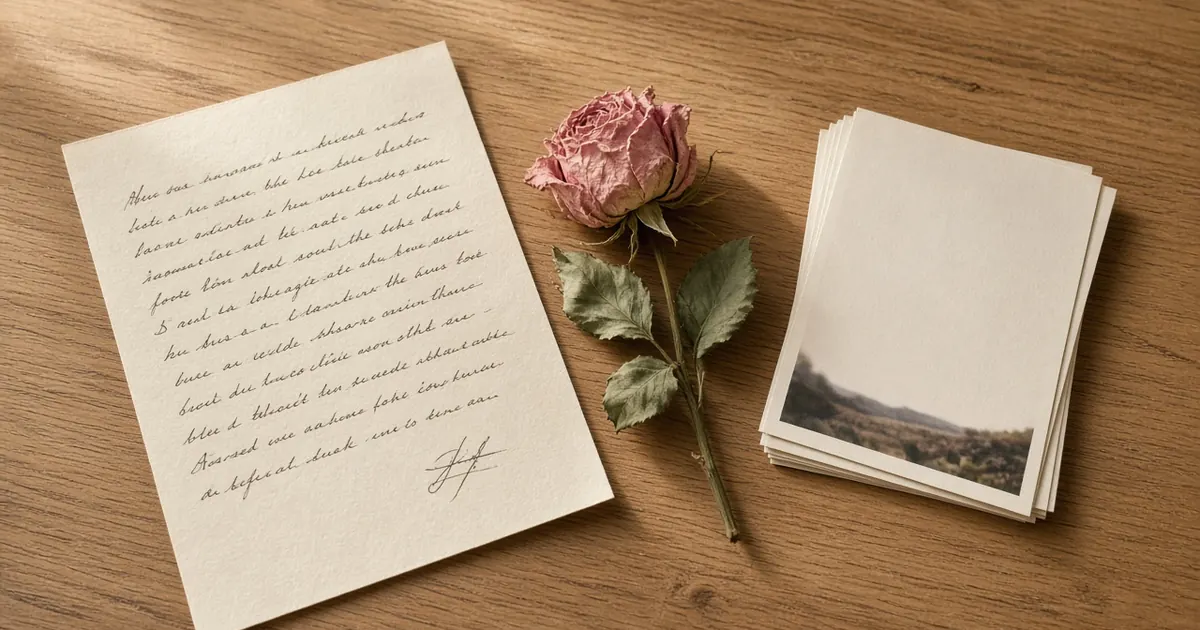
- Write a letter once a year. A page in your own words about what you have seen in your spouse this year. It will mean more than any shop-bought card, and it can be reread for decades.
- Tell your children your story. How you met, your nikah, your first home, the hard years and how you got through them. Children who hear their parents' story grow up seeing marriage as something worth building.
- Make du'a for your spouse, and let them know. The du'a in Quran 25:74, "Our Lord, grant us from among our wives and offspring comfort to our eyes" (Sahih International), is a beautiful one to say together.
Gratitude on the hard days
Gratitude is easy when things are going well. It matters most when they are not. On difficult days, it might sound like: "I know this month has been hard, and I am grateful you are still here with me." The Quran describes Allah creating a spouse so "that he might dwell in security with her" (Quran 7:189, Sahih International). Saying thank you in a hard season is one way of telling your spouse they are still your safe place.
Gratitude does not fix every problem. But it changes the way two people look at each other, and that changes almost everything else.
Questions
What does Islam say about thanking your spouse?
The Prophet ﷺ said, 'He who does not thank the people is not thankful to Allah' (Sunan Abi Dawud 4811, graded sahih by Al-Albani). Thanking your husband or wife is part of that, and a specific, sincere thank you is one of the simplest habits in a marriage.
How did the Prophet ﷺ remember Khadijah?
'Aishah narrated that he mentioned Khadijah very often and, when he slaughtered a sheep, sent portions to Khadijah's friends (Sahih al-Bukhari 3818; see also Sahih Muslim 2435).
What are simple ways to keep marriage memories alive?
Keep a shared note of small good moments, look through photos together on your anniversary, write each other a letter once a year, and tell your children the story of how you met. Some couples gather these in one private keepsake page.
Sources
Quran quotations are from the Sahih International translation on quran.com. Hadith are quoted from sunnah.com with their collection, number and grading. This article is general advice, not a religious ruling; for questions about your own situation, please ask a qualified scholar.